
Bench Warrants in Putnam County
In Indiana, a bench warrant is a court's arrest order inside an existing case. It can be civil or criminal. In Putnam County, one may follow a missed criminal hearing, traffic date, ordinance setting, probation event, or bond appearance. Civil matters sometimes carry the label body attachment instead. The docket's exact wording matters. "Capias" and "capias pro fine" are not the usual Indiana labels, so don't force them onto a Putnam County record. What the warrant does is simple. It compels the person back into the court process. The underlying case stays open for whatever plea, payment, compliance, or defense step it needs. Trust the judge's orders, not an old web result or an unofficial list.
Putnam Bench Warrants Start in Court
Putnam County posts no public bench-warrant roster. Start with Indiana MyCase, the state's case portal. It can show warrant information inside a public case summary. Search by name, cause number, citation number, or cross-reference number. Then read the Chronological Case Summary in date order, looking for a failure-to-appear event, warrant order, bond event, service entry, recall, or new hearing date. The Indiana warrant FAQ draws a firm limit. MyCase is not a warrant search, and Indiana has no public site covering all arrest warrants. Sealed, expunged, juvenile, non-Odyssey, or confidential material may be missing, so a blank result does not prove clearance.
- FTA
- Failure to appear at a required court event.
- Recall
- The court withdraws its warrant order.
- Quash
- The court legally sets aside the warrant.
- Body attachment
- An Indiana civil arrest order used in specified proceedings.
How a Bench Warrant Is Issued
In Putnam County, the assigned judge acts when the record shows a missed duty or another lawful ground. The Clerk places the filing and order on the case docket. Once issued, the warrant lets an officer take the named person before a judicial officer. The Clerk does not issue or cancel the warrant. A serving agency cannot recall a judge's order either. The path varies by case. A missed traffic information or summons may become a failure-to-appear event and a warrant under Indiana procedure. Failing to appear while out on bond can also bring bond forfeiture in Putnam County. Child support matters run through Putnam Title IV-D and the assigned court. Have the cause number and court assignment ready.
Typical flow: required event → nonappearance entered → judge reviews record → warrant issued → service, voluntary appearance, or recall → case resumes.
Failure to Appear in Putnam
A missed date needs prompt attention. Even with no warrant entry online, act. Write down the case number, the scheduled date, and the assigned court. Call the Putnam County Clerk at 765-653-2648 for record routing. Then ask the court whether the judge entered an FTA, set a new hearing, issued a warrant, or imposed bond. Staff can explain procedure but cannot advise which legal choice to make. Traffic infractions and ordinance violations go to the Putnam County Magistrate Court. An online payment vendor does not control that warrant. Paying may cover money due while an appearance or recall step stays open. Confirm what the court requires. Then verify the docket change.
Quick answer: Call the assigned Putnam court after a missed date; payment or an empty search result does not confirm warrant recall.
Bench Warrant vs Arrest Warrant
Both orders permit arrest. They come from different events, though. A Putnam County bench warrant usually enforces an existing obligation. An arrest warrant rests on probable cause that the named person committed an offense. The distinction shapes both the record and the response.
| Feature | Bench Warrant | Arrest Warrant |
|---|---|---|
| Usual basis | Missed appearance or court duty | Probable cause for an alleged offense |
| Case setting | Often an existing docket | Criminal charging and affidavit process |
| Issuer | Judge in the assigned case | Judge or magistrate |
| Response | Appearance, recall, compliance, or bond | Surrender, bond, and initial hearing |
The labels overlap, since a bench warrant is still an arrest order. Read the docket instead of guessing. The Putnam County arrest warrants reference has more detail.
Putnam Bond Rules Need Confirmation
Putnam County's local rule lists starting bond amounts and conditions, but paying a listed sum is never a promise that a bench warrant clears. Felony ranges run from $10,000 to $40,000 by classification. Own-recognizance release is allowed for resident B and C misdemeanors, with exceptions. Several categories carry no bond unless a court orders otherwise. The judge's specific order controls. Cash bond follows court or jail instructions, and surety goes through a licensed bond agent. Own recognizance is a promise-based release. "No bond" bars or delays release until required court action. Putnam County publishes no warrant payment window, no accepted payment-method list, and no online bond form. Ask whether bond applies and where it must be posted. Bond alone does not end the case.
How to Resolve a Putnam County Bench Warrant
Start with verified court facts. Putnam County publishes no walk-in docket, surrender appointment, recall form, or warrant fee. A lawyer can assess a recall or quash request. The lawyer can also coordinate with the court before an appearance.
- Find the assigned court and cause or citation number in MyCase or through the Clerk.
- Ask whether the warrant is active and whether the judge requires a motion, payment, bond, new hearing, or appearance.
- Consult counsel when the matter is criminal or the proper filing is unclear.
- If surrender is ordered, call the Sheriff at 765-653-3211 for current logistics.
- After action, obtain the next date and confirm recall in the court record.
Caution: Do not ignore an active bench warrant or arrive on an assumed schedule. Confirm the court’s order and surrender instructions first.
Putnam Court Records Have Limits
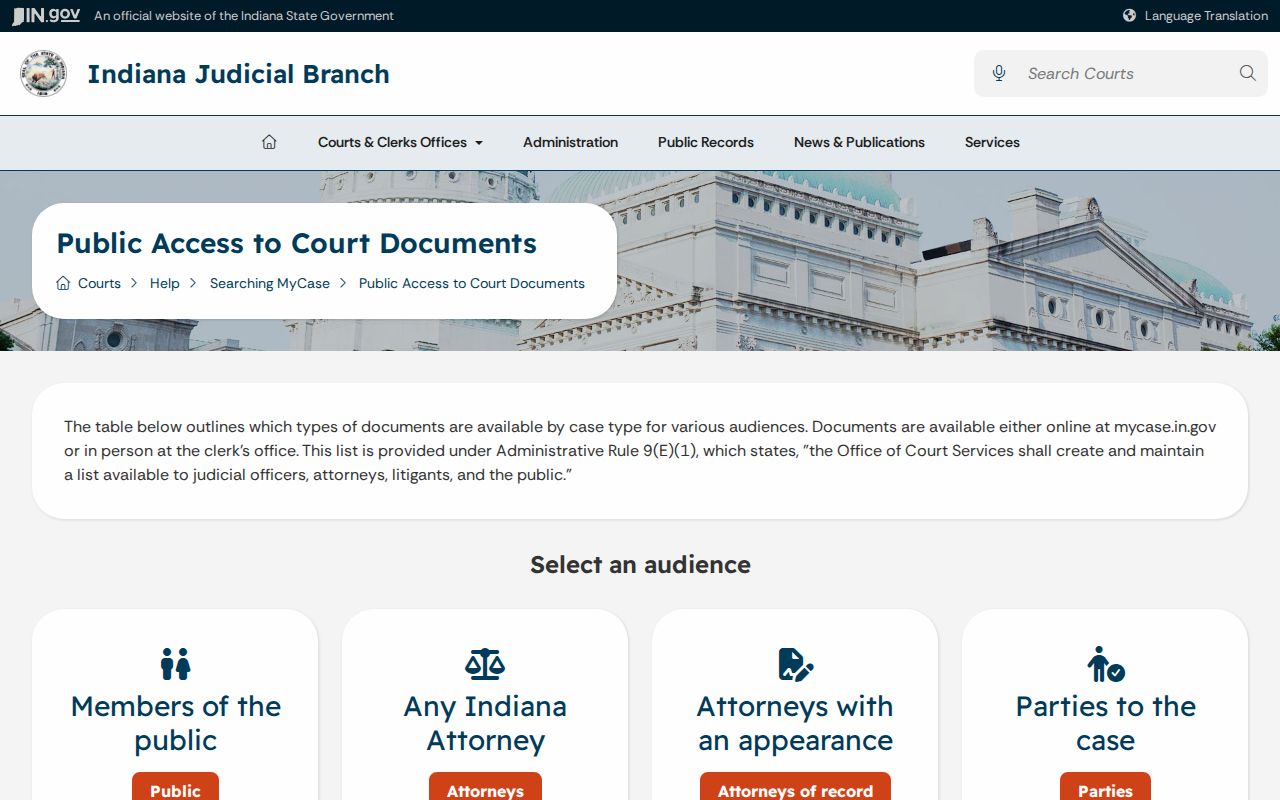
Why do online and courthouse access differ? The Indiana public-access matrix explains it. The matrix distinguishes public documents from records unavailable online or restricted by court rule.
A case summary can appear without a warrant document attached. Sealed, juvenile, expunged files are not public lookup material in Putnam County. The state request guidance sends court-document requests to the Clerk and law-enforcement records to the agency that holds them. Keep any request narrow. It should identify the requester, record type, cause number if known, date range, and format. The Clerk lists no warrant-copy fee. Indiana guidance says inspection of a public court record carries no inspection or staff-time charge, though lawful copy fees may apply.
Which Putnam County Court Issued It
All three local courts sit at the Putnam County Courthouse in Greencastle. MyCase shows the division handling the warrant. The court overview names Circuit, Superior, and Magistrate Courts. The published structure lists no Justice of the Peace precincts and no separate city-court warrant portal.
| Court or office | Role | Phone |
|---|---|---|
| Putnam Circuit Court | Assigned felonies, some misdemeanors, juvenile and civil matters | 765-653-5315 |
| Putnam Superior Court | Assigned criminal and civil matters | 765-653-2658 |
| Putnam Magistrate Court | Traffic, ordinance, and listed civil matters | 765-301-9197 |
| Putnam Circuit Court Clerk | Cause number, docket, copies, and filing route | 765-653-2648 |
| Title IV-D | Child-support routing | 765-653-8929 |
The Clerk identifies the file. The judge alone controls recall. In Putnam County, the Sheriff handles service and custody, so never ask a serving agency to cancel a court order.
Putnam Surrender Is Phone First
Start with a phone call in Putnam County. The Sheriff's official contact page lists 13 Keightly Road, Greencastle, 765-653-3211, and weekday administration hours from 8:00 a.m. to 4:00 p.m. The public entrance is on the east side. The Putnam County desk is not a warrant counter, and phone confirmation is not promised. Call after the court or counsel identifies the warrant and the next step. Ask which unit handles voluntary appearance. Ask what identification and medication rules apply, whether a judge must be available, and how bond is accepted. Administration hours do not guarantee surrender hours. Afterward, get the filed order or receipt and confirm the docket with the issuing court. Release, bond, or payment does not erase the underlying case, so keep the next hearing notice and comply with release terms.