
Arrest Warrants in Putnam County
Indiana Code 35-33-5-2 sets the groundwork. It requires an affidavit for an arrest warrant, with a few stated exceptions, and the affidavit must describe the person particularly, allege the offense, and lay out facts showing probable cause. A judge or magistrate reads that submission before signing anything. Probable cause, in plain terms, means a legal basis to think a crime happened and that the named person committed it. In Putnam County, the Circuit and Superior Courts handle the criminal cases assigned to them, and the cause number or MyCase record tells you which court holds the file. One more thing matters here. A court can keep an arrest warrant confidential before service when an authorized exclusion applies. So an empty public search cannot settle whether an unserved Putnam County warrant exists; only the issuing court can.
Indiana Probable Cause in Putnam
The affidavit is what links facts to a person and a charge. The judge's review sits between an accusation and an arrest order, and that distance is the whole point. Indiana law also lets some misdemeanor cases begin with a summons instead of custody. But under Indiana Code 35-33-4-1, an unjustified failure to appear after a summons can trigger an arrest warrant once the statutory conditions are met. That sequence matters when you read Putnam County warrant records. An affidavit or probable-cause event may come first, then the warrant order, then a service return. A summons case looks different: notice, nonappearance, then issuance. Treat the Chronological Case Summary as a timeline. One entry read alone, without its neighbors, can paint a false picture of where the case stands.
Key point: Probable cause permits the arrest process to begin; guilt is decided later through the criminal case.
What a Putnam County Arrest Warrant Contains
Indiana's public case system may show a case summary while keeping the unserved warrant document itself unpublished. The fields below describe what may appear across the court file. Not every item is public, present, or current, and Putnam County publishes no sample warrant number format to rely on.
| Cause number | The court’s case identifier and strongest routing key. |
|---|---|
| Named subject | The person identified in the order, subject to access limits. |
| Alleged offense | The filed charge and classification, not a finding of guilt. |
| Issuing court | Putnam Circuit or Superior Court as assigned. |
| Probable-cause event | The docket entry reflecting judicial review or supporting filing. |
| Bond terms | An amount, type, or no-bond order when publicly shown. |
| Service or return | Later activity showing execution or officer return. |
| Recall or clearance | A later judicial action changing warrant status. |
Use the cause number when you call the Putnam County Clerk or court. Names alone can match more than one person. Date of birth narrows MyCase results, though it does not display in public case details.
Putnam Arrest Warrant Access Gaps
Indiana MyCase lets you search by name, case number, citation number, or cross-reference number, but it has no arrest-warrant tab and no active-only filter. The official warrant FAQ says warrant information may appear in a qualifying public criminal case summary, and no statewide public site lists every arrest warrant. A sound Putnam County warrant check runs in steps. Search the docket, find the court and cause number, then call that court for current status. The Circuit Court line is 765-653-5315, Superior Court is 765-653-2658, and the Clerk is 765-653-2648. Ask whether the warrant is active, served, recalled, quashed, or confidential. Court staff give facts and procedure, not legal advice. For Sheriff-held records or surrender routing, call 765-653-3211. The Putnam County Sheriff keeps no dedicated warrant desk, direct warrant email, or request portal. Jail Tracker shows current jail lodging only, so absence there says nothing about outstanding warrants.
How Putnam County Arrest Warrants Are Served
The Putnam County Sheriff is the countywide law-enforcement contact, but its site does not claim exclusive service of warrants. Greencastle, Cloverdale, Roachdale, and Bainbridge police or town marshals may encounter or serve a warrant within their own authority, and Indiana State Police District 53 or other authorized peace officers can also act. Which agency shows up depends on the assignment and the place of the encounter. Service can come through a planned surrender or a routine officer contact. After arrest comes booking, then the initial-hearing and bond process. Putnam County's local rule generally allows bond as soon as practical after arrest and processing, subject to the judge's order and to exceptions for no-bond charges, family violence, intoxication, controlled substances, and other listed conditions. The same rule requires a judicial probable-cause determination when someone is held beyond 48 hours without a court warrant or writ. One caution on surrender. The Sheriff's administration page posts no walk-in surrender hours, so do not show up based on an online comment or assume weekday office hours are a bond window. A lawyer can first ask the court about a controlled appearance, bond, or a motion to recall. Then the Sheriff can handle current custody logistics.
Putnam Agencies Have Separate Roles
The Greencastle Police Department page is the city's official contact source for Putnam County residents. It lists the agency's public contact and lobby information, not a warrant roster.
Greencastle police can answer local arrest or service questions, but only the issuing Putnam County court can recall its warrant. The city's page lists 600 N Jackson Street and 765-653-2925. The court record and the police operational record stay separate. The official Cloverdale town contact page offers another local channel, and Cloverdale publishes no public warrant portal or municipal-court recall form.
Cloverdale Police is listed at 765-795-3800 in the county resource guide. An officer there may know whether a Putnam County warrant has been served, but Circuit or Superior Court alone speaks for its own criminal warrant.
Arrest Warrant vs Summons vs Bench Warrant
Each order creates a different duty. A summons asks you to appear, with no arrest ordered up front. Skip a duty in an open case, and a bench warrant often follows. An arrest warrant goes further: it authorizes custody once the required probable-cause process is complete. In Putnam County, read the docket text to see which order you face.
| Feature | Arrest Warrant | Summons | Bench Warrant |
|---|---|---|---|
| What it orders | Arrest and court processing | Appear on the stated date | Arrest and return to court |
| Basis | Probable cause for an offense | Charge proceeding without initial custody | Missed appearance or court duty |
| Issuer | Judge or magistrate | Court under Indiana procedure | Judge in the assigned case |
| Response | Counsel, surrender, bond, hearing | Appear as directed | Recall request, appearance, compliance, bond |
Ignoring a summons can change things. If Indiana's conditions are met, the court may issue a warrant later. A bench warrant is still an arrest order even though it alleges no new offense. The Putnam County bench-warrant page walks through that court-enforcement path.
State Police and Putnam Service
The Indiana State Police District 53 page documents the state-police post covering Putnam County as an official agency channel, not a public warrant database.
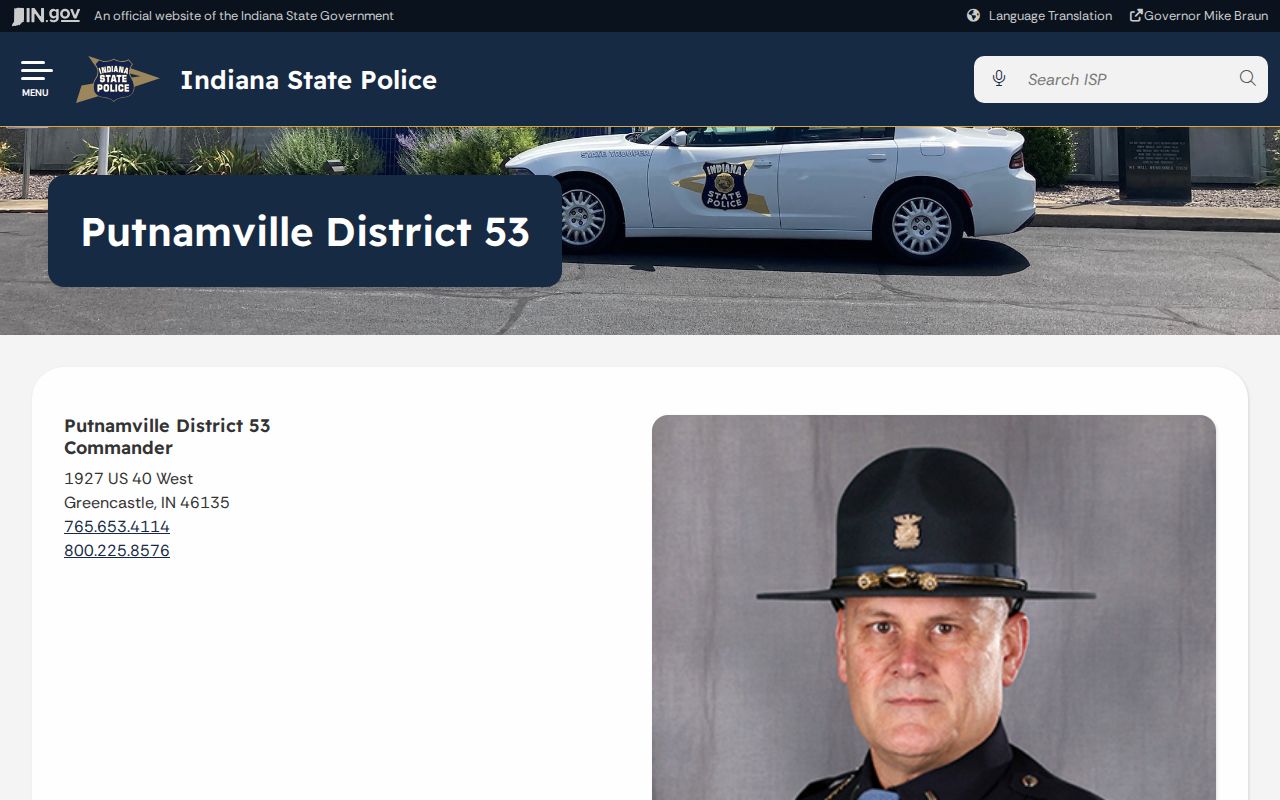
State police may run across a Putnam County warrant during lawful enforcement work. The district page is not a name search. For court status, only the issuing court answers, while an officer or the Sheriff handles service and custody questions. Roachdale shows the same split on a town scale: its official police page supplies agency contacts, not authority to recall a warrant.

Roachdale's official sources list 205 N Indiana Street and two numbers, 765-522-1532 and 765-522-1785. Confirm the current one before you rely on it. Route local service through the police; take warrant questions to the Putnam County court that issued the order.
Federal Warrants Use Another System
Federal warrants run on a separate track. Putnam County sits in the U.S. District Court for the Southern District of Indiana, so a federal warrant never shows up complete through MyCase or a county-court call. PACER may surface a federal docket, though a warrant or case can stay sealed until service, and silence at the county level proves nothing about a federal matter. The U.S. Marshals Southern District office lists Putnam among its covered counties, with its Terre Haute office at 921 Ohio Street, Room 150, phone 812-232-5058. Before calling any agency about a possible federal warrant, get federal criminal-defense advice; the county Sheriff has no power to recall a federal judge's warrant. This layering is why each inquiry needs the right jurisdiction. Putnam Circuit and Superior Courts control their state cases, federal judges control federal matters, and service agencies execute orders without rewriting them.
What to Do If There Is a Warrant for You
Act on verified facts, not fear or an unofficial search. Get the cause number. Get the issuing court. Then talk to a criminal-defense lawyer if you can. Counsel can ask the Putnam County judge whether a controlled appearance, a motion to recall or quash, a bond arrangement, or voluntary surrender fits your case; a motion is a formal request, and recall or quash means the judge withdraws or sets the warrant aside.
- Review MyCase, but do not treat a blank result as clearance.
- Confirm the warrant and assigned court with the Clerk or court.
- Ask counsel about a controlled appearance, surrender, bond, or lawful motion.
- If surrender is directed, call the Sheriff for the current place, time, identification, medication, and payment rules.
- After processing, keep the bond receipt and next hearing date, then verify the docket status.
The published bond schedule is only a starting guide. It covers cash, surety, own-recognizance, and no-bond outcomes, but the case order controls. Putnam County offers no online bond portal or warrant-payment window. Posting bond secures release and appearance; the criminal charge itself goes on.
Important: Speak with a lawyer before surrender when possible; an active arrest warrant can be served during any lawful police contact.